Showing posts with label M1 (307-1). Show all posts

Monday, 5 December 2011

RESEARCH

PART 1 (Location Photography - Landscape)
PERFECT MACH – Kah Kit Yoong&Winnie Ho

Only two photographers left to research in Landscape photography I was looking for some inspiration all over the internet when I by chance come across them two. Kah Kit Yoong and Winnie Ho mostly working together taking unforgettable images was perfect match for my conclusion about Landscape photography`s research part.

Kah Kit Yoong. Melbourne based travel and nature photographer developed his skills while tramping the pristine wilderness of Tasmania. Kah Kit's appreciation of the world's wild places has inspired him to capture its landscapes: raw, dramatic or beautiful. He has been widely published in many magazines, including National Geographic Traveller, Popular Photography, Nature's Best, Digital Camera and Australian Photography. His work has been awarded both in his home country Australia as well as in the UK and USA.

Winnie Ho. Also based in Melbourne, she`s love of photography goes hand-in-hand with her love for exploring new places. Her photographic journey reflects a personal quest to understand light and always seek beauty in the unexpected. She is drawn to the natural landscape and its rhythmic flows and Her work has been published in various publications including the ANZANG collection, Australian Photographer Magazine (cover) and National Geographic.


Introduction on both join web page they says ~”We strive to capture the light that transforms land, sea and the legacy of man into a scene that stirs the emotions and senses. More often than not, this quality of light can be found during the ‘magic hour’ … We hope the viewer will share our anticipation and excitement as the light unfolds.”

Looking they photographs I just sit in the silence as I didn’t have words to described how beautiful they are, I selected the most impressive to put on my post, even find an each one`s description what allows us to get idea how they was made.

Lone Apostle

Twelve Apostles, Port Campbell, Great Ocean Road, Victoria, AUSTRALIA

Dawn on the Great Ocean Road.
Blend of two exposures, one for water action (2 seconds), one for the sky (60 seconds).
Canon 5DMkII, 16-35mm 2.8L, ISO 50, f14, 60 seconds and ISO 200, f9, 2 seconds, GND filter, Gitzo tripod.


Photograph by Kah Kit Yoong

Paradise Cove

Betka, Croajingolong, Victoria, AUSTRALIA 

An interesting formation in the rocks... Canon 1DsMkIII, 16-35mm 2.8L, 3HS GND, ISO 100, f20, 0.8 seconds.


Photograph by Kah Kit Yoong

Blue Beach

Twelve Apostles, Port Campbell, Great Ocean Road, Victoria, AUSTRALIA

An overcast on the Shipwreck Coast.
Canon 5DMkII, 17-40mm 4L, ISO 100, f22, 30 seconds, GND filter, Gitzo basalt tripod.


Photograph by Winnie Ho

Infinity

Great Ocean Road, Victoria


The Southern Ocean in alayered presentation.

Canon 5DMkII, 17-40mm 4L, ISO 100, f9, 1/40, GND filter, Gitzo tripod.

Photograph by Winnie Ho


I feel really jealous looking these photographs …they are captured so well, with such a feel to it. The entire gallery is a partnership comprising the artistry and vision of Kah Kit Yoong & Winnie Ho. And it’s not only includes seascapes. They apparently been all around the world to capture places and make them into breath taking, beautiful fragmented scene`s.

I wish I for future will develop same skills and be able to travel more to gain the experience of capture the world, as only by trowelling both of Kah Kit Yoong and Winnie Ho get to the point that they photographs now undertaking major projects on commission.

When Photo Review asked how he dealt with the inevitable questions from friends and colleagues about "how do you take such good photos?” his reply: “My answer is that you just need to go out and take lots of photos. There's no substitute for it. A good alarm clock is useful to make sure you're up at dawn.' In the end, says Kah Kit Yoong, 'you need to be looking at what's around you. The reason I got into photography to start with was that I love being out there taking photographs. You could read lots and lots of books, but nothing makes up for being out in the field.”

Both Winnie and Kah Kit are talented and increasingly recognized photographers and seasoned travellers…all the places they been and capture is beyond every man’s wildest dreams. I even found some photographs from the visits to Cornwall, which I find very useful to my particular Cornwall Magic hour theme.


Wild Brushstrokes
Cornwall, England
High tide on a remote beach.

Canon 5DMkII, 70-300mm 4-5.6L, ISO 400, f5, 0.5s, Gitzo Mountaineer tripod.


Photograph by Winnie Ho


 Lizard Land
Cornwall, England

Sunset on the coast of the Lizard Peninsula.

Canon 5DMkII, 16-35mm 2.8L, ISO 100, f13, 14 seconds, GND filters, Gitzo tripod. 


Photograph by Kah Kit Yoong


These Cornwall seascapes are recently added. Looks like they, were luckier with weather as I. really strong images showing that exact moment, atmosphere. Shot, as you can see, with low shutter speed in order to get blurry water feel.  Probably using extension shutter realise, what I still don’t have. In my pictures I mostly work with a Bulb setting to control exposure myself…Have to say it’s a hard job by the open sea during strong winds. Lots of my images just don’t do on sharpness wise and this is something that even Photo Shop can’t do.

Looking through my photographs’ of same Lizard point and other places in Cornwall, I decided not to put any on this post as I have nothing to compare with Kah Kit Yoong`s and Winnie Ho`s work. I have lots more to learn, I have to find time to go places and to be patient towards weather forecast.

Please feel free to look at other great work of this couple as it`s something unbelievable, considering, that they just took camera to they travels once and made by now in the top spot.


Tuesday, 22 November 2011

RESEARCH

 PART 1 (Location Photography - Landscape)
John Freeman

Please to meet you another great photographer with familiar surname John Freeman…but even so it`s nothing to do with different John Freeman based in London author or of over 30 books..  Probably surname Freeman is more or less popular and how you can imagine successful…

John is a nature and landscape photographer based in northern Italy. He first became interested in photography as a teenager, but began photographing the natural world more seriously in the early 1990s sparked by a passion for plants and botany. For many years he used Velvia slide film but has recently been enjoying the creative freedom offered by digital cameras, combining macro photography and intimate landscapes with broader vistas captured with wide-angle and fish eye lenses. That’s why searching for some landscape professional’s I came across with him, as his photographs took my breath away. Even if you have to considering that is probably slightly digital manipulation involved. I have to say J.Freeman`s seascape’s is one of the best what I saw so far and it`s so close to what I want to achieve.

The perfect wave, heading towards to viewer, creating stunning black and white contrast between earth and water.
Very good example of using slow shutter speed. I’m not very successful of that, the best I can do to use a Bulb option to slow it down and released when I want. Works very well in the low light.
Nice scene of golden hour, it’s hard to tell its sunrise or sunset, but could be both. Looking this picture I almost can hear the waves as a photographer done a good job captured sea at its best time.
Same as previous photograph make you believe… Stormy sky and open water brings out all feel of that day.

His images makes beautiful composition with nice effect from slow shutter speeds… the mood and lighting is brilliant showing perfect contrast between motion and still.. bright and dark. Feel created by the moving water and the clouded sky is absolutely stunning.

In my images I also tried to get same feel and atmosphere, I didn’t consider they as a bad, but something slightly is missing, to get that impact what could compare with John`s photographs.

Photograph taken in late morning, when sun is already high, so no much contrast and colours there, but I like the silver light what surrounds that time Porthleven`s coast.
Praa Sands -located in the South West of Cornwall between Helston and Penzance is one of the finest beaches to be found in the UK. Photograph taken in the afternoon and not the best of weather, sky is dull, colours grey, but still I think this image have some potential after post-processing.
I like this photograph as it gives same sort of impression of up coming storm. Fortunately it was only big cloud.  Image is underexposed, to get that required result and it works well.
Lands End...magic place to be...Shot is on Bulb mode in very late evening, sunset filter adding good sense of sunset painting sky in warm colours.

Images are from my recent visit to Cornwall. I absolutely adore this place, with its wild sea scenery, changing weather and open space. Anyway I quite pleased with these images as they work well in composition wise.
As you can see I didn’t do any manipulation yet but improvements are needed…from adding a contrast, to structuration change.

For my final images I will do exactly that to make landscape stand out and work together with sea creating perfect photographs.


Tuesday, 15 November 2011

RESEARCH

PART 1 (Location Photography - Landscape)
Michael Freeman
In order to understand how to capture the beauty of the world around you have to take some advantage of professional photographer Michael Freeman, who with many years of experience can learn how to frame the perfect shot.

Michael Freeman - professional photographer and author, with more than 100 book titles to his credit, was born in England in 1945, took a Masters in geography at Brasenose College, Oxford University, and then worked in advertising in London for six years. He made the break from there in 1971 to travel up the Amazon with two second hand cameras, and when Time-Life used many of the pictures extensively in the Amazon volume of their World's Wild Places series, including the cover, they encouraged him to begin a full-time photographic career.

Capturing the scene before you - be it a natural landscape..a dramatic cityscape or a majestic wild animal, can be a daunting prospect. Unlike portraiture or still life, you have very little control over the scene before you so you need to draw on other skills to get a professional result.

M.Freeman in his works giving everyone tips and advice on all aspects of outdoor photography, from how to photograph shots of birds in flight to capturing the Atlantic Ocean crashing into a lighthouse. Because in order to photographing natural landscapes you need to know how to deal with various types of sunlight and weather and how to make them work with you in creating memorable results.

More or less all digital photography is based on after image manipulation, and very rare cases you can escape that…For me unfortunately is very painful as I am perfectionist, but well I have to give it a credit, as in various computer software’s can do something what cant be done just by capturing a scene.

A stormy sunrise over a bleak moorland scene in Cornwall

Evening in Porthelven (Cornwall)

Above you can see beautifully captured and created M.Freman`s photograph, what inspire me to try something similar. Well not on that kind of level as I can`t consider myself to be even close to that. Look at those clouds, perfect magic hour shot – intuitive done, showing peace of that calm, rising day.


Mine was taken and early evening when sun just about disappeared in clouds…scene is a bit boring, but added contrast touch and Vignette tool makes it little comforting – hopefully.
Also I try to work with Curves tool In Photo Shop – make the image look more underexposed as it originally was.

I get that idea from one tutorial site, when M.Freeman was describing techniques of low key.

LOW KEY - choosing a subject that lends itself to a dark treatment, followed by processing the file to favour the shadows and darker tones.

Quite often, the dark mood of low key is easier to achieve if you convert a digital colour image into black and white, what exactly I did — monochrome images usually withstand extreme processing or post-production more successfully than does colour and somehow they work better.

Also quite interesting for me was tutorial about The Appeal of Many.   The idea  is  to filling the frame with a large number of interesting and similar, or even identical, subjects massed together in some kind of pattern, That’s it in summary, a condensed description, but if we look at all the elements that go to make it up, there’s a surprising amount of camera work to achieve it. 
And this is what I love the most…patterns…as you can see from my previous blogs and posts I adore that kind of photography- captivate all in one frame.
Mine two last images taken in Cornwall maybe are not the best examples, but its shows the similarity of ideas from M.Freman`s Marseille - Old port or Pearl harvest.

Getting new ideas from those tutorials, inspirations from M.Fremans work was very useful  ... hope you -the reader find it too.

Below I listed his books and referenced sites what can help you.


Photography books:
  • Athens (Time-Life, 1978),
  • Guardians of the North-West Frontier: The Pathans (Time-Life), 1982, Wayfarers of the Thai Forest: The Akha(Time-Life, 1982,)
  • Angkor: The Hidden Glories (1990,)
  • The Photographer's Eye: Composition and Design for Better Digital Photos
UK (ILEX, 2007) US (2007,)
  • Michael Freeman's Perfect Exposure
UK (ILEX, 2009,) US (2009,)
  • The Photographer's Mind: Creative Thinking for Better Digital Photos
UK (ILEX, 2010,) US ( 2010,)
Books on Asia
  • Ricelands: The World of South-east Asian Food (Reaktion Books, 2008)
  • The Spirit of Asia: Journeys to the Sacred Places of the East (Thames & Hudson, 2000,)
  • "New Zen, The tea-ceremony room in modern Japanese architecture" (Eight Books, 2007,) and many others
Books on Africa
  • Sudan: The Land and the People (Thames & Hudson, 2005). This book was accompanied by a 70-print exhibition, mounted by, Washington DC, a non-profit public diplomacy institution, which organised the exhibit to tour the US for three years.
Books on Interiors 
  • "The Source - Inspirational ideas for the home" (Eight Books, 2009,)


Tuesday, 8 November 2011

Color and Light

 B o o k  R e s e a r c h

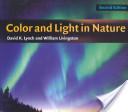
Every of us are familiar with a light as a meaning of brightness, glow, radiance, shine etc…and as a main provider of it is our sun. But not everyone probably ever thought about variations of light…many different ways how light what we see travels to us and that every time light changes. 

Why is the sky blue… Why do mountains glow in the dark… Is the darkest always before the dawn… An ideal reference to have to hand in answering questions such as these I found in  Color and Light in Nature, -book written by astronomers D.K Lynch and W.Livingston.
Most people notice only the occasional rainbow and pretty sunset, yet they could see much more if they only knew what to look for…and that’s what this book is all about…


Also everything you need to know to understand the characteristics of light and the foundations of photographic lighting, including film, filters, exposure, compensation, zone system and an array of creative techniques can be found in a similar source- book: Photographic Lighting: Essential Skills  by Mark Galer and John Child.
The authors use terminology that is easy to understand and explain techniques in a clearly written, no nonsense manner and to help improve the use of light in photography and encourage visual expression.  A variety of activities and assignments throughout the book teach lessons in a creative context that can be applied immediately to develop the professional in you.


And at least but not last… Transient Light: A Photographic Guide to Capturing the Medium students and amateur photographers who wish to break into the professional market, the superb images and technical expertise offer something for all levels of skill and will also inspire those just becoming interested in photography and more established photographers who need to refocus their photographic motivation.
Composition and technical expertise are vitally important and author outlines the best field techniques for choosing the correct exposure, discusses depth of field, hyper-focal focusing, exposure bracketing and the use of appropriate filters.

Monday, 31 October 2011

RESEARCH

PART I (LOCATION PHOTOGRAPHY)
Joe Cornish
 
"Much of photography`s pleasure is in the many challenges it provides. When making landscape photographs we are often confronted with places so huge and weather so unpredictable that when we set out we cannot know what a sort of opportunities will fallow. There is always a solution, a picture to be made - and not just one, but many different possibilities. Our task is to find a way the best distils our subject and experience’s."
/J.Cornish/ 

Joe Cornish (born 1958) is a British photographer noted for his large format landscapes. Born in Exeter, Devon, England, Cornish has produced a significant body of work for the National Trust. His images of locations in the United Kingdom and around the world have been featured in photography magazines…while his larger Northallerton gallery also displays other photographers in temporary exhibits.

Joe Cornish’s photographs are featured on a range of high quality postcards and greetings cards, as well as in books.

One of them as always I get my hands on…I was going away for a weekend in Cornwall so I have to read some tips about photographers work by coast. Well time was my enemy as usual and sky wasn’t the best as well. But in any different way that for me was a trip of the lifetime and can easily see what benefit for J.Cornish mostly working by the coast…
 
So as I said my main research source was one of J.Cornish books “Joe Cornish Photographer at work”, written by Eddie Ephraums. Friend and collaborator Eddie Ephramus over a four-year period, has created a unique record of J.Cornish working methods in a variety of locations from Cornwall to Holy Island. 
This book explores the processes and challenges in the making of some landscape photographs.


 Northumberland Beach
Whistling Sands, Gwynedd

View of Dunstanburgh castle

A view of Fairhead from Portdoo in the dawn sunlight.

Looking his images I can see place of limitless sky, how good he is, how professional he works with a light – creating so perfect composition. The polarising filter is one of the main accessories in Joe`s work as increasing colour saturation and removing reflections, what can also bring out the sky more. A few light clouds add depth and mood to the colour image – without them, the sky appears stark and unyielding. 

J.Cornish is photographer who puts a great deal of effort into every image. As he says “Many artistically inclined people are caused by the pursuit of perfection: certainly I suffer from that. By definition, perfectionists may fail to be satisfied. So I think philosophically there has to be another way. Im seeking to replace perfection with  a connection.”

As myself I have same problems, perhaps that’s way for one scene I have more than 10, sometimes 20 images. I can seek for the one for hours forgetting about everything…but usually only few can satisfy me.


Shutter Speed: 1/50sec  Aperture: F20  ISO: 100
~long walk~
Shutter Speed: 1/15sec  Aperture: F16  ISO: 100
~Porthelven bay~
Shutter Speed: 3sec  Aperture: F20  ISO: 200
~Porthelven sunset~

Shutter Speed: 1/100sec  Aperture: F8  ISO: 200
~sun&sand~

These my images stands very far from J.Cornish work, but even so show my willing to try out his technique’s using a filters and different angles. First photograph with St Michael's Mount in foreground was taken placing camera right to the ground to get that infinity feel. I like experiment that way. This is probably not the best example as I had to do some manipulation what involved straighten and adding some contrast. Picture was taking the worst hour possible – midday walking by the sea, so no extra clouds or colours, what is so important in Landscape photography.


Second is a bit better as I managed to wait for right moment…just when wave was the right place to make some similarity with the evening sky. Taken in Porthelven right before sunset- also not as good as have to be.


The third is image is from same place but different direction. Same as Joe`s I tried to locate my camera in different places, angles to find the connection. Also using a sunset filter transformed photograph completely adding a warm tones and giving real sunset feel.


The last but not least is one of my favourite’s…I probably can`t expect everyone to see what I’m seeing, but I just love this image as for me the little puddle is caching last bit of sun just before sunset and it’s something very simple that makes it in my eyes just perfect photograph.

For future I hoping to get back to coast to practise some more…as in your life you never stop learning…camera matters, but not so much…more important what you see and how you bring it to others….

“Yet technique is not related to having a better camera, but rather a matter of our ability to understand and often override the automated controls the manufacturers obligingly place like obstacles in our creative path.” /J.Cornish/


Bibliography


Wednesday, 12 October 2011

The Golden Hour in Photography

Once for a while I had incredible chance to experience a magic hours for three days as I was away for long weekend by the Cornwell coast. That was so amazing that I decided discuss this in my blog as a part of research for my Landscape theme.
For random people probably its doesn’t mean anything but for photographer, specially Landscape - its everything. Professional photographers know that this is the time of day with the best lighting.

Definition:

In photography the golden hour (sometimes known as magic hour) is the first and last hour of sunlight during the day, when a specific photographic effect is achieved due to the quality of the light.

If there's one thing that can make a good photo image more than any other, it's lighting. You might have the most incredible landscape or stunning portrait model, even the bastes camera possible but without the right quality of light you can still be left with a flat, dull, and uninspiring picture. I know that by experience, when I was away in Wales during the daytime…location was amazing, but light just don’t do it, so I end up fixing and editing images for more or less decant black and whites.

So what’s a stand for meaning Golden Hour?

The golden hour, also called the "magic hour", is roughly the first hour of light after sunrise, and the last hour of light before sunset, although the exact duration varies between seasons. Contrast is less during the Magic Hour, shadows are less dark, and highlights are less likely to be overexposed. The warm color of the low sun enhances the colors of the scene. Lighting effects of it can bring out some of the most unique, interesting and dramatic compositions, which is much more flattering than the harsh midday time that so many of us are used to shooting in.

Shutter Speed: 1/5sec  Aperture: F5  ISO: 200
before sunrise near Lizard`s point


As an added benefit, there are generally few people around that time than there are at other times during the day, giving a chance to capture images in relative peace, which also is truth. This image is captured on Lizard Point, Britain's - most southerly point about half an hour before sunrise. Despite a popular area, haven’t seen anyone around what was really helpful.

Searching materials about golden hour I found couple useful tips for the best shot during that time of day as they pose their own challenges and it is essential to be prepared – especially when need to sacrifice morning sleep, leaving bed on a cold morning.
  • Low Light Conditions: When the sun is on the horizon, light is low in intensity. You will need to be prepared to take long exposures and it is very important that you carry a tripod along to reduce camera shakes.
Well I had a tripod, but wasn’t very helpful as it was quite windy day and especially my big telephoto lens, was hard to control from shaking.
  • Camera Mode: Manual – as you can experiment as you like, whit the different settings depends what you have in mind. Also any other semi auto modes can lead to a pretty good picture. 
As I already most of the times learn myself to use Manual it wasn’t problem
  • Bracketing: Will definitely need to bracket your shots. The underexposed shot will most likely be the one.
Well I’m very good at it…maybe too good as for one scene I have more than 10 images with different F stops and shutter speeds, because you have to make sure that even one will be useful as you can’t go back and re shot the scene, not only because of rare location, but even in light wise as it will never be the same.
  • Timing: The biggest challenge photographer’s face during the magic hours is the timing of the shot. The light during the magic hours changes so is important to take shots as many as possible to not let by chance miss the one…
It is very stressful I had to say, when you realise that you have to be very fast to catch the right light, but sometimes get hold back by changing lenses or looking for better F stop or shutter speed..
  • Image Format: In tricky shots like these you want to shoot in RAW- it`s allows full control on the picture data.
Hmm…that’s decision can be made only by professionals…I had experience shooting in RAW, but after is very hard to post processing image, as file is a lot bigger than usual. If you 100% sure you can make a perfect photograph – well defiantly go for it, as it is worth that.
  • Angles: Try different angles. Light during these moments varies with every angle as does the reflection and gradient and the colors.
I agree it`s very important…change the angle, direction, position, tripod high…by doing that is very good chance then at least one good image you will have.
  • Peripherals: Carrying extra battery, storage etc. since you will be taking shots every few minutes, also some other lenses.
It’s very important as you can’t afford battery low etc…this probably as always is that thing all or nothing…take all what you have…or not point even get up.
Shutter Speed: 2/6sec  Aperture: F13  ISO: 200
after sunset by Land`s End

Calculating the Golden Hour.

The best way to calculate the times of your two daily golden hours is to use golden hour calculator and as long as you can access internet it could be easily done and also will help to plan shots.


I found very useful site where you can see haw it works…


Next just do some simple maths - the first golden hour of the day will begin just before sunrise and continue for about an hour. The second golden hour will begin around an hour before sunset and finish just after.

The golden hour rule can be applied not only of outdoor photography. As well as the more obvious subjects such as landscapes and city scenes, it also works well for outdoor portraits, shots of flowers and plants, and even certain types of still life such as cars. Its all down to you what you have in mind. I glad I had finally the chance to experience it and for me is nothing more beautiful as morning golden hour.